Meta
Reality Labs
Building a 0-1 hardware product in a software company
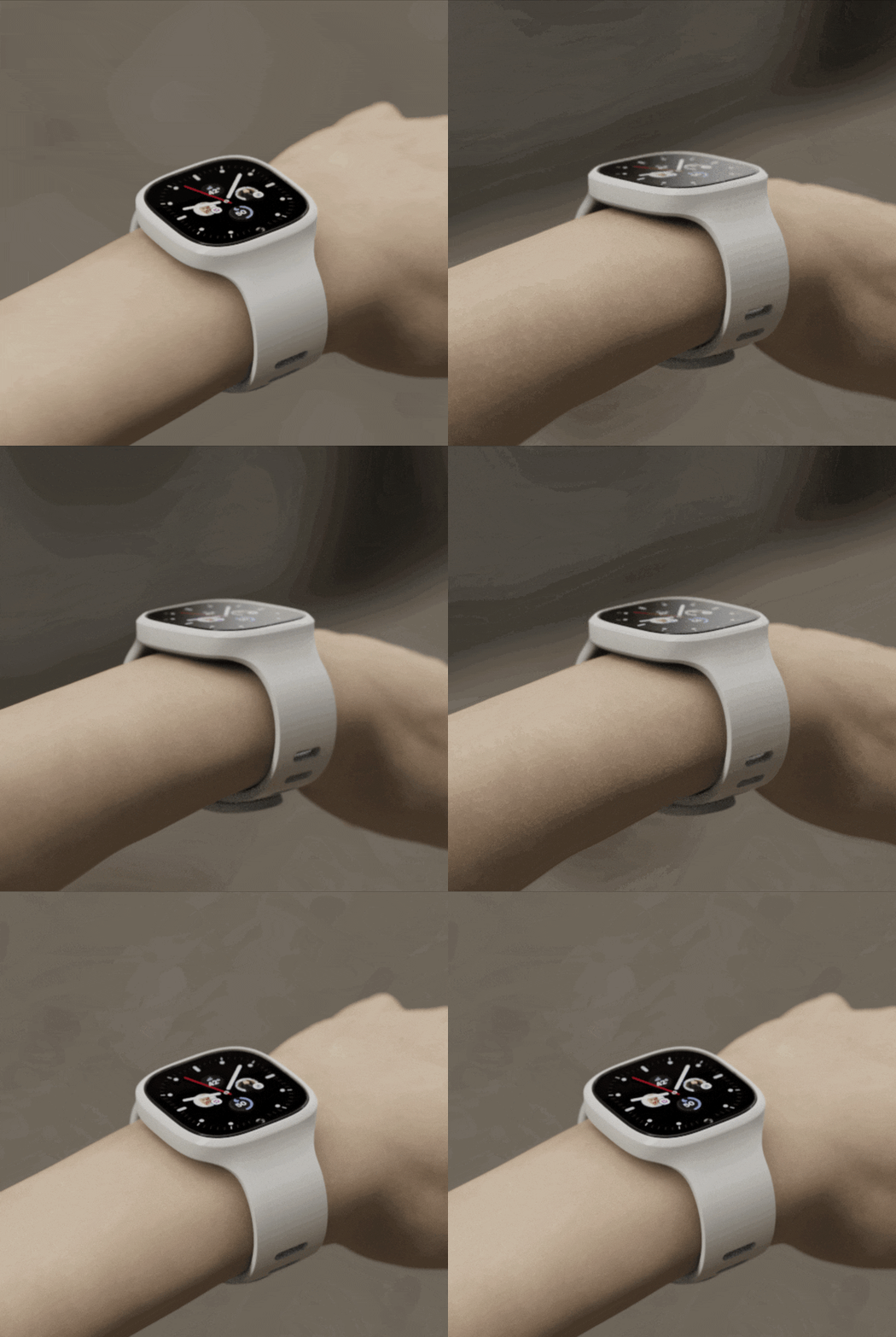
After nearly two years at FB marketplace, I made the jump to the highly coveted reality labs team at Meta. I had always been captivated by the idea of working on a wearable device, mainly due to the practicality it could bring.
I transitioned over to lead messaging experiences on Meta's new AR wrist wearable. It was meant to be the first real breakthrough product for the company in a market that we were nearly 10 years behind Apple on and that no one had really been able to pressure them on.
With some innovative ideas like detachability, EMG and dual cameras; our main value prop rested on these tech advances and the backing of Meta's family of apps (Instagram, WhatsApp, Messenger). Overtime the reality of hardware development made our tech advances smaller and smaller as we got closer to launching, and really made us lean into communication as the hero journey for our device.
We defined our program mission as: Empowering people to be more connected with each other while more present with the world around us.
If we could make communication frictionless and readily accessible, we would position ourselves as a viable contender that targeted something much more human, increasing meaningful connection with each other.
What is meaningful connection?
Connection is the energy that exists between people when they feel seen, heard, and valued. It’s how one feels towards another person, group or idea and it changes over time and is affected by different factors.
We quickly realized that 75% of communication across FoA is with your top 5 people. Roughly 50% is with one person.
"Who are the 1-5 people you want to feel connected with even when apart?"
For this device to be successful it needed to be personal, private, and highlight access to the people you loved the most.
How do you communicate?
Working with limited hardware constraints we designed a new operating system with its own design system that had to meet the communication jobs that you would expect from a phone, on your wrist.
I was tasked with creating the first interface at Meta that would consolidate all your messages from Instagram, WhatsApp, and Messenger and present them in a unified and digestible way.


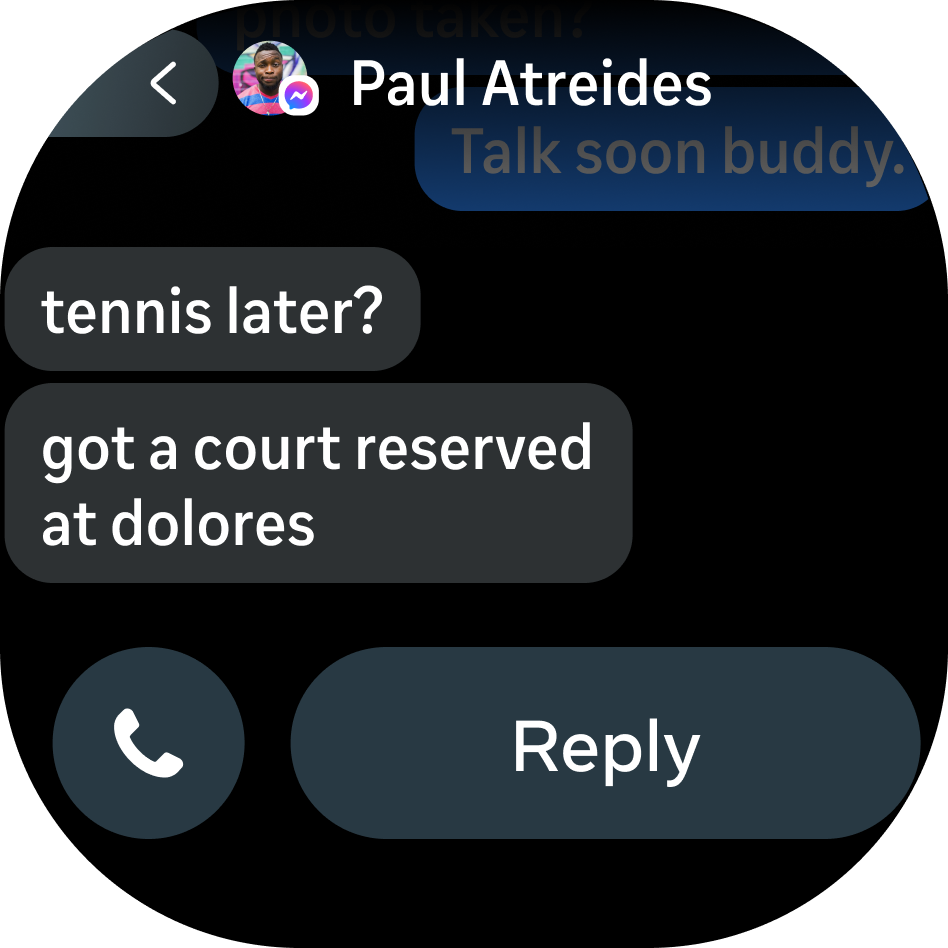
How notifications would look, the rules around when to use haptics / sound and how to not annoy our users with senseless interruptions.
Consumption of messages was one half, the other half was replying. How do we prioritize one input over the other when a user expects to be able to send a text message, voice message, emoji, react, media and more within a tap or two?


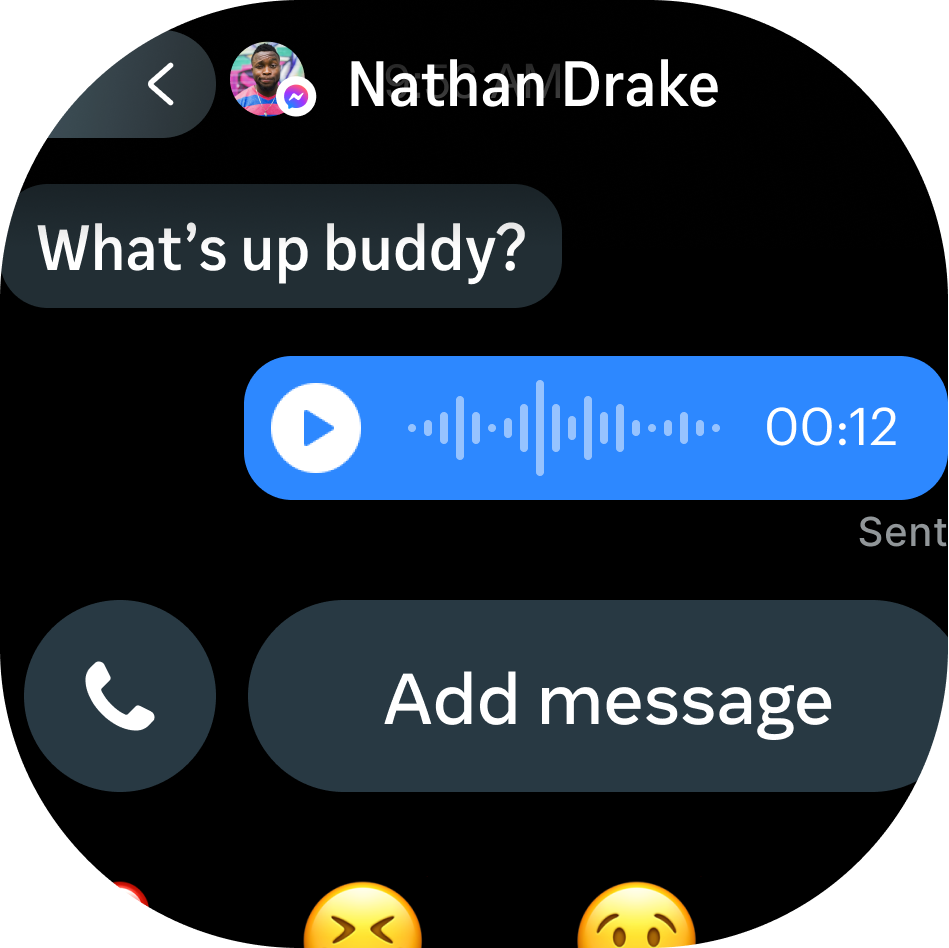
Taking into account demographic and regional behaviour and optimizing it per country and per platform ( etc. voice messages are highly utilized in South America, Asia, and Europe but not on the US).
We had a robust feedback loop that was limited but questionable at best. We were restricted from dogfooding the product in public, and had to rely on a internal dogfooding population that was too close to the product and having a hard time getting naturalistic usage with it.
But we continued iterating and were getting closer and closer to a product we could be proud of and would meet our original vision.
The input of the future
With EMG and "Magnolia" (our own machine learning model based on accelerometer and gyroscope input) we were able to detect pinch, wrist roll, and clench gestures reliably enough to enable one handed control of the device without having to physically touch the screen.
We established a system of predictable patterns and affordances that a regular user could onboard to and utilize to enable these interactions.
This also enabled experiences that could be tied together across Meta devices letting users control things in their environment or have immersive interplay between our VR and AR headsets.
Unfortunately this project got paused at the end of 2022 and is currently in limbo as Reality Lab priorities are being shifted.